
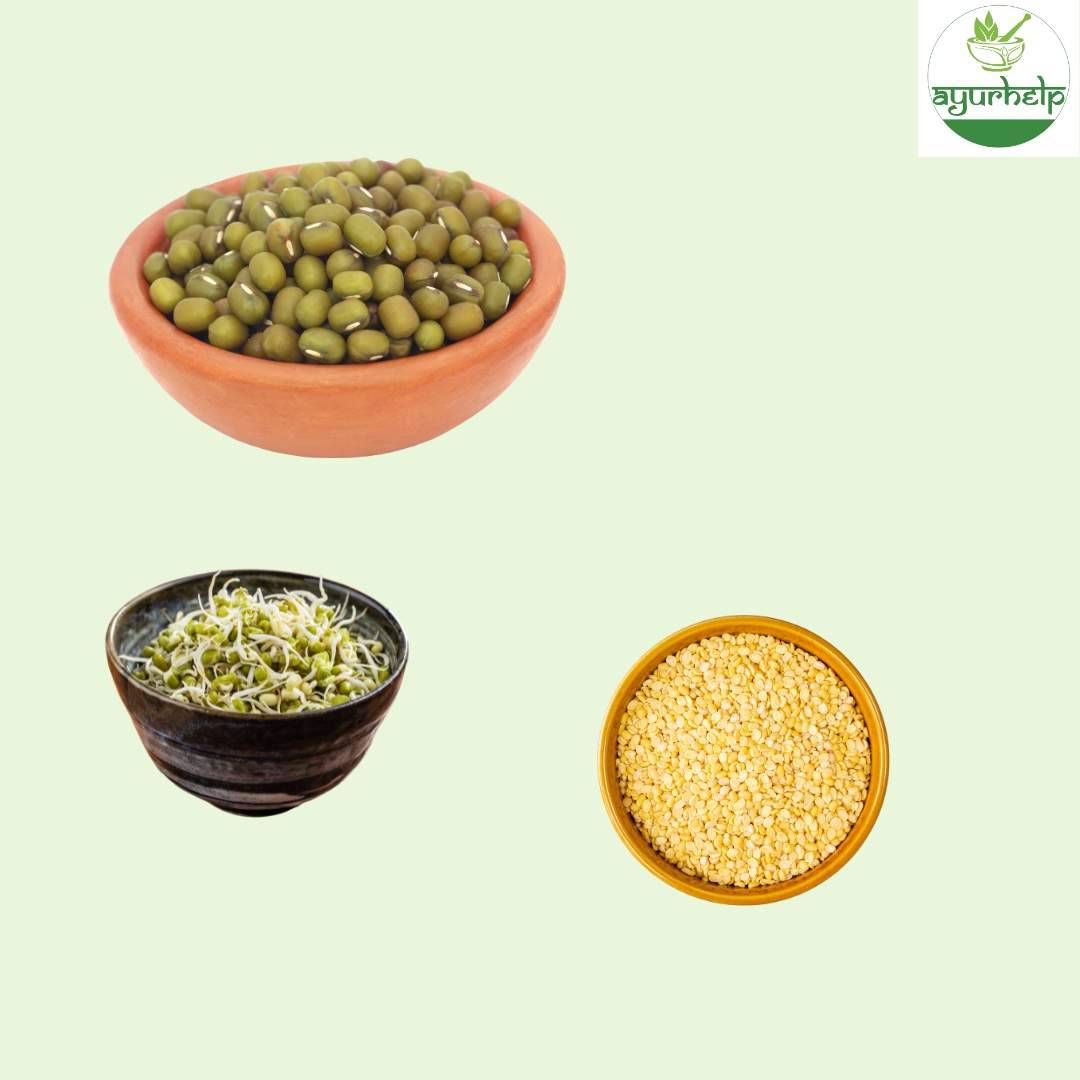
Vigna radiata, commonly known as the moong bean, green gram, or mung bean, is a vital leguminous plant in the Fabaceae family. Originating in India, it has become a staple in various Asian cuisines and is cultivated worldwide. Revered for its rich nutritional content, Vigna radiata provides protein, vitamins, and minerals. Beyond its dietary benefits, its adaptability to diverse soil types and resilience to pests make it a preferred crop for farmers. Additionally, as a legume, it plays a crucial role in improving soil fertility by fixing atmospheric nitrogen, showcasing its ecological significance in sustainable agriculture.
Moong Plant Structure
Moong Bean in Ayurveda.
Health benefits of moong beans
- Improves male reproductive health
- Helps in Weight management
- Good for pre diabetics
- Relieves Constipation.
- Best diet for PCOS
- Good for Hair health
- Keeps Skin healthy and young
- Best protein diet for IBS
How to incorporate moong beans in diet
Green Gram Plant Structure
The Moong bean, botanically known as Vigna radiata, is an annual leguminous plant belonging to the family Fabaceae. Widely cultivated for its edible seeds, this plant exhibits a bushy growth form and can grow up to 30-120 cm in height.
Roots:
Being a legume, the moong bean plant possesses a taproot system that grows deep into the soil. The roots form symbiotic relationships with Rhizobium bacteria, which help in fixing atmospheric nitrogen, thus enriching the soil.
Stems:
The stem is slender, branched, and slightly hairy. It is erect or semi-erect, enabling the plant to be bushy.
Leaves:
Moong bean leaves are trifoliate, meaning each leaf is divided into three leaflets. These leaflets are ovate to rhomboid in shape and can be 5-15 cm long. They have a bright green color and are slightly hairy underneath.
Flowers:
The flowers are small, yellow, and borne in clusters of 10-20. They give way to the pods once pollinated.
Fruits (Pods):
The pods are cylindrical, 5-10 cm long, and contain 10-15 seeds. Initially green, they turn yellow or brown as they mature.
Seeds:
The seeds, commonly known as moong beans, are small, oval-shaped, and green or yellow in color. They are consumed in various forms across many cultures and are renowned for their nutritional value.
Moong Bean In Ayurveda
In Ayurveda, the ancient Indian system of medicine, every herb or food substance is evaluated based on its intrinsic qualities that determine its therapeutic effect on the body. Here are the Ayurvedic properties of moong bean (Vigna radiata):
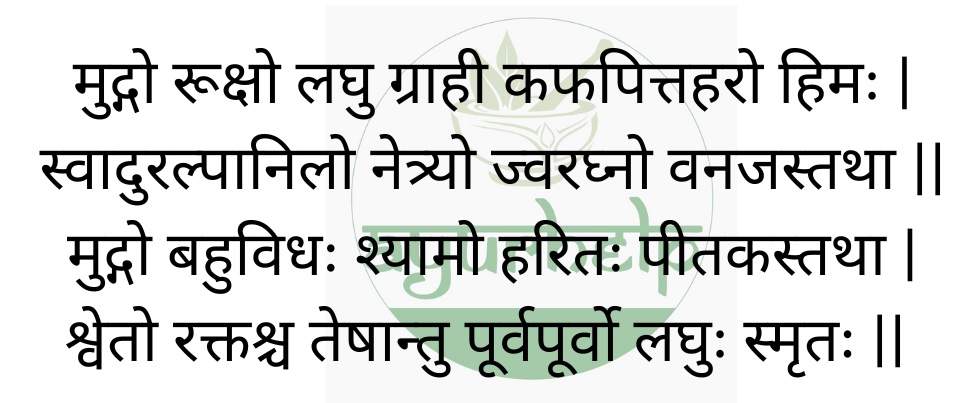
Ayurvedic properties of moong
Texts of ayurveda explain the properties of mungbean as follows
Related Articles